Travel preparation: How to start your vacation well prepared
Gather essentials:Cherry pit heating pad, fever suppositories, nasal spray – parents know which home remedies and medications their child regularly needs. If you keep these essentials in one designated place – ideally the medicine cabinet – you'll have everything for the vacation within reach.
Travel health insurance: To travel with peace of mind, travel health insurance is beneficial. As a rule, you can take this out for the whole family as an inexpensive supplementary policy – the relevant proof should then be included with the travel documents.
Vaccinations: Find out early from your pediatrician or the tour operator whether your child needs any special vaccinations for the destination. For many vaccinations it takes some time before full protection is established. The vaccination record should also go into the travel medicine kit for emergencies.
Childproof:The travel medicine kit should be stored childproof both en route and at the holiday destination. Ideally a lockable extra pouch, and for warm destinations also a small cooler bag or similar.
Travel medicine kit: What do I need to consider?
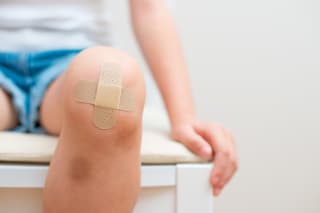
Plan a bit more generously – 1/3 more than the usual consumption. Many medications must be stored cool and dry. If you are traveling by car or train, transport in a cooler bag is therefore suitable. This is generally advantageous if you are traveling to a warm country. For flights, regularly needed medications should preferably be carried in hand luggage, in case the suitcases arrive later than you.
The travel medicine kit should be checked and, if necessary, reassembled before each vacation: Is there still enough of a product in the package? Have the expiration dates been exceeded? How long has a package been opened? Especially for babies and toddlers, you should also check whether fever-reducing agents and the like are still appropriate for your child's age and weight.
Checklist for your travel medicine kit
Wound disinfectant
Plasters and gauze bandages for minor wounds
Nail scissors, tweezers, and a tick remover
Fever thermometer
Fever suppositories or fever syrup
Proven anti-diarrheal medications
Electrolyte powder against dehydration from diarrhea
Children's nasal spray, especially for flights
Cough syrup
Insect repellent
Cooling gel for insect bites and burns
Anti-inflammatory ointment
Children's sunscreen, min. SPF
If applicable, medications that your child needs to take regularly Vaccination record
Vacation in the south – how to protect your child from sunburn
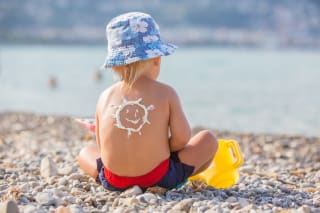
At least SPF 20: When traveling to sunny countries, sufficient sun protection is essential. A special baby or children's sunscreen tailored to sensitive children's skin is required here. Sunscreen should be reapplied after splashing in the sea or in the pool each time - this is recommended even for "waterproof" sunscreen.
Protective clothing: In addition to sunscreen, a sun hat is mandatory; for babies also a little shirt or short romper. First aid: If your child has had too much sun, cold compresses with diluted apple cider vinegar or natural yogurt on the skin help. Your child should drink plenty and stay in the shade until the sunburn has subsided.
Sun break: Babies should not be exposed to direct sunlight at all, and toddlers should spend at least the hot midday hours indoors or in the shade. Get your child used to the sun gradually!
The homeopathic travel medicine kit for babies & children
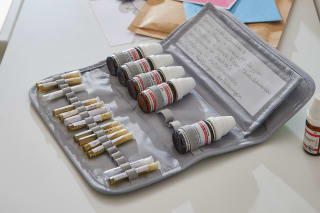
Homeopathic remedies are popular with parents and a good complement to conventional medicine. As a rule, the preparations have no expiration date and are suitable for all ages; moreover, the sweet taste of the globules makes administration easier for small children. An overview of homeopathic remedies for the travel kit:
Arnica at potency C200 supports wound healing and helps with bruises.
Belladonna helps with heatstroke or sunburn.
Cocculus is good for dizziness, nausea, or weakness; therefore it is popular for motion sickness or jet lag.
Lendum relieves insect bites and can also be given preventively.
Silicea supports the skin's self-healing process, for example when expelling splinters or ticks. In doing so the skin does not begin to suppurate. Silicea is also helpful for sinus infections.
More articles about leisure & creativity

Image credits
Two children with band-aids sitting on a stair step © bubutu - AdobeStock
Child sitting on a chair with a band-aid on their knee © M-Production - AdobeStock
Boy with a diving mask and sunscreen on his back, ready for the blazing sun © Tomsickova - AdobeStock