Favorite child – What does that mean?
To find out whether it's okay or perhaps even perfectly normal for parents to have a 'favorite child', you first have to define the term 'favorite child' for yourself. Does this mean the favorite child in the classic sense who can get away with everything at home and is preferred by the parents over the other children? Or does the term simply describe the fact that parents can identify with their children to different degrees and may find a completely different connection to one child than to another? In one study 65 percent of mothers and 70 percent of fathers admitted that they favor one of their children – with many of them at the same time trying not to let the favorite child show and to treat all their children as equally as possible. Basically, one can assume that very few parents consciously disadvantage a child or want to give it the feeling of being less important than a sibling. However, children have a pronounced sense of fairness – many siblings perceive unequal treatment by the parents even when the parents themselves are not aware of it.
Why is one child closer to me than the other?

The reasons why parents have a favorite child are diverse. Often it is an interplay of several factors: one's own personality and the personality of the children, one's own childhood experiences, the order of the children, or the circumstances under which they came into the world.
Birth order: The firstborn child always holds a special place with the parents, because the experiences with this child remain particularly formative in memory. Of all the siblings, the firstborn is the only one who enjoyed the parents' undivided attention – for many parents it is therefore unconsciously an 'anchor' in family life.
Gender: Studies show that fathers often prefer the youngest daughters, while mothers give special attention to the firstborn sons. Boys and girls are treated differently by some parents due to cultural and societal conditioning – but that does not necessarily imply a disadvantage.
Personality: Often parents recognize their own character traits particularly clearly in one child. It is only natural to feel more drawn to that child and perhaps have more understanding for their traits.
Formative experiences: Sometimes life-changing experiences cause a child to be treated differently from their siblings. A particularly difficult birth or an accident in which the child was in great danger can lead parents to remain more lenient with that child later on and to give them especially a lot of attention.
How does unequal treatment affect children?
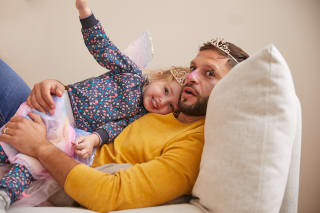
It does not have to be associated with negative experiences for children to be treated differently by their parents — as long as the family situation is harmonious overall and each child receives the attention they need. Almost all children are jealous of their siblings from time to time or feel disadvantaged; that's perfectly normal. But if a child feels consistently sidelined, they often carry the consequences throughout their life: these children frequently struggle later with low self-esteem and insecurity around other people. Conversely, clearly favored siblings may later have difficulty integrating into society when they no longer automatically receive the attention they are used to.
Favorite child — is it normal? Tips for parents
Every person is different: Be aware that it's impossible to love two children in exactly the same way, even if both can love just as strongly
Enough attention for each child: If you as parents are aware of and respect your children's different needs, none will feel sidelined
Enjoy special closeness: Enjoy the special relationship with one child — that doesn't have to mean the other children are being shortchanged
Reflect critically: Observe your behavior toward your children. Maybe you'll notice patterns or habits that you weren't aware of?
No self-blame: Don't blame yourselves if the relationship with one of the children is closer than with the others; instead, enjoy the individual relationship with each child
Discover more articles on parenting & psychology









Image credits
Mother holding children on her arm © Westend61 - stock.adobe.com