Why is it sensible to support children early?
In early years your child's brain is fully set to "learning".Every impression is processed and converted into new information or skills. Research has shown that children between the ages of between two and four years old particularly quick to form nerve cells that network within a short time: Support during this window is therefore especially useful
. to strengthen. Connections that are not or only rarely used are then forgotten by the brain. For this reason it is important to pay attention to the type of support – and not to forget the fun.. Only what is also needed later and can be built upon is sensible: With early holistic support you therefore do more good for your child than with a special language or reading course before entering kindergarten and school. These advantages are quickly caught up by classmates and your child may get bored if they have to hear the material again and thus lose interest in school.
What is musical early education?
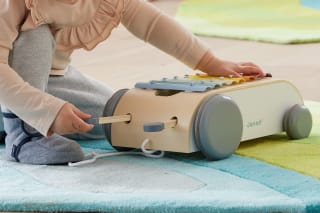
Musical early education gives children the opportunity to to have first experiences with music. They get to know different instruments, learn to play one or more of them and can move freely and intuitively music. Often in the crawling group, nursery or daycare center people already like to sing together, clap or dance. Musical early education builds on this and is intended to deepen it – perhaps even as a basis for later singing, dance or music lessons.
But musical early education teaches your child not only to engage with music, singing and dance, but also it has an overall positive effect on the child's development. For example, these experiences are also beneficial for motor, physical and language developmentespecially useful
Goals and content of musical early education
Musical early education aims to to support children holistically. The basis is music, but dance and singing also play essential roles. The making music together in groups of peers provides space for movement, play and interaction. The focus is on children fully engaging in the task and experimenting without developing feelings of shame, as most adults would if they had to sing or dance in front of strangers.
Contents of musical early education courses
Getting to know and playing different musical instruments (Orff instruments such as drums, rattles, triangles, glockenspiels or xylophones)
Learning many simple songs and dances
Movement, free or choreographed, with or without music
Training of the ear: high and low tones, loud and quiet, long or short notes
Introduction to the clef
Working in groups
What are the advantages of musical early education?
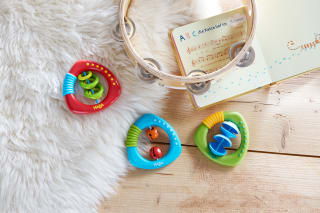
Studies show that children who engage with music early are usually smarter, more creative and more social. But what exactly are the advantages of musical early education?
Collaboration of both brain hemispheres:
Since children during the courses not only listen or sing, but also combine music with movement, both hemispheres of the brain are stimulated and must work together. Thus other abilities such as reading or math can be learned better later.
Gaining first experiences:
In early education the little ones can already develop preferences early on and later more easily decide on an instrument and the appropriate lessons. And even if your child during the course does not become enthusiastic about a particular instrument your child may discover a preference for dancing or singing.
Social skills are learned:
Your child attends the course with about eight to twelve other children. They learn to play instruments together and must pay attention to others and listen, so that everything sounds harmonious in the end. This way they also develop their social skills.
Concentration is practiced:
In order to play along properly and be able to hear the differences in the music, your child must concentrate. This also teaches them to be able to focus on a task later on.
Creativity is promoted:
In addition to guided dances there is also time when children can move as they please. This not only strengthens their body awareness, but they don't really care how the movements look – the main thing is that they are fun!
Where is musical early education offered?
Musical early education is usually offered in courses that run for about two years. In Germany, music schools offer the courses for children aged three to six. However, it is recommended to start about two years before school enrollment, i.e. at four to five years old, to begin musical support. Also many kindergartens offer early education as a course for interested children. It's best to get information from friends and acquaintances, who can surely recommend a good course.
More articles about leisure & creativity




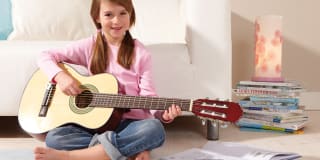




Image credits
Two little girls making music with xylophone and tambourine © liderina - stock.adobe.com